Carlos González: “If leaders want genuinely committed people first, that leader must be committed and at the service of those people”
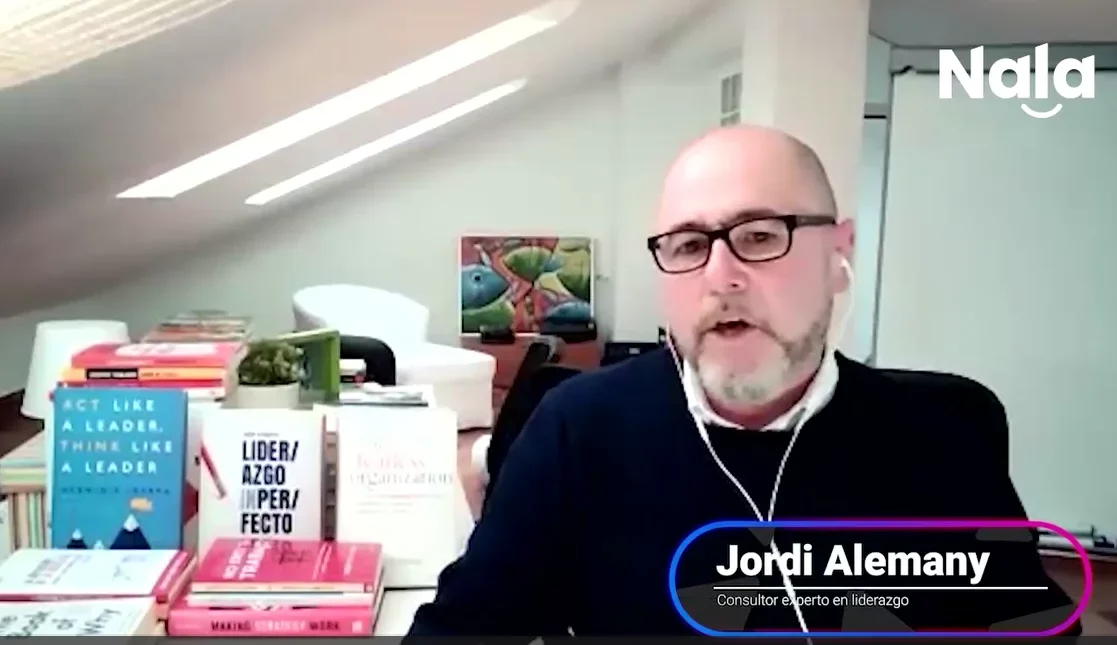
Carlos González. In the interview, the graduate in Human Resources from the City of Córdoba, Argentina, and diploma holder in Positive Psychology introduced himself as “a passionate entrepreneur, understanding entrepreneurship as a contribution of value to society, to other people.” He also spoke about his transition from technology to Human Resources…
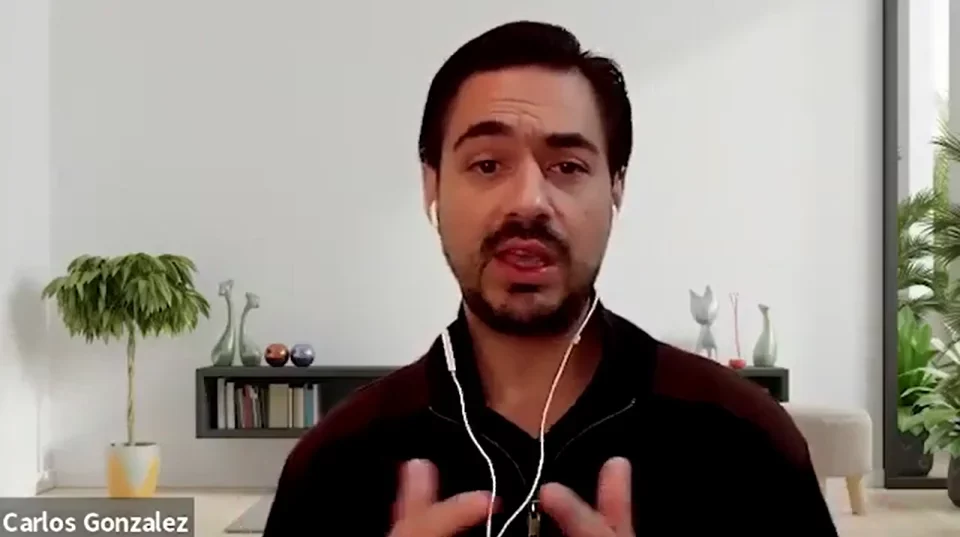
Carlos González.
In the interview, the graduate in Human Resources from the City of Córdoba, Argentina, and diploma holder in Positive Psychology introduced himself as “a passionate entrepreneur, understanding entrepreneurship as a contribution of value to society, to other people.”
He also spoke about his transition from technology to Human Resources and his starting point in human development, a world he decided to dedicate himself to completely. “What I seek in this work and training of leaders, high-performance work teams, is that they bring their being to the company and that it also be a space for that human being to develop fully, that they can truly contribute value, feel connected to what they do, the benefit is mutual,” he stated.
Below, part of the interview:
- In the current labor world context, what trends or changes do you see organizations need to make today to attract, retain, and develop talent in organizations?
Something that leaders and the organization as an ecosystem fundamentally need to work on, and that I do in my trainings but always represents a challenge for people, is working more on listening.
There are leaders who listen little, work teams that listen little, which is not the same as hearing; listening requires attention, presence, even a willingness that what I am hearing might change my points of view, and when listening is lost or not given importance, relationships generally start to disconnect because they no longer converse at the levels required to reach a purpose, high performance, work, and common goals, and when those relationships disconnect, first trust is lost, and when trust is lost, it is very difficult to really work together on something.
- It is difficult to achieve that trust relationship, especially nowadays with the hybrid modality earthquake, we miss that human connection, have you seen that this has changed in human relationships or can this trust still be generated virtually?
It has been seen that trust can be worked on virtually; it requires extra effort that is often not taken into account, because there is also an additional phenomenon related to neuroscience, how our brain works when we are working virtually.
When we are behind a screen, dopamine and noradrenaline levels, which are motivation and drive factors, tend to increase but at the same time serotonin levels tend to decrease, and something serotonin provides us is that moment of enjoying what we are doing, savoring it, when one really says I am caught up in this.
What technology generates in our biology are low serotonin levels, what increases it? Being in person, sharing moments with people we appreciate, love, listen to. Doing everything behind a screen predisposes us to higher stress levels, and there an additional job for companies is to increase those serotonin levels.
Today I see it as a challenge in the times we live in companies, not only because of virtuality, virtuality aggravates it, but also because of the pace of life and especially the need to respond to objectives, challenges, which I think is very good but we have to work a lot on the how, because with brains taken over by cortisol, by stress, we will not have the best capacity of that human being to achieve those objectives.
- When my clients ask about the challenge of virtuality, for me the big challenge for leaders is not only focusing on calls being for work but on how to generate different connection spaces, (...) I invest the first 10 minutes talking about their weekend, their life, what they did, because that ultimately helps that connection, but it is a big challenge.
And including in those conversations the meaning, what matters to us, what we value, what matters to them, what their challenges are, because all that awakens enjoyment, regardless of whether we are virtual or in person.
That is also a challenge looking to the future, already warned by the World Health Organization, that by 2025 one of the main causes of absenteeism, turnover, and even resignations will be depression.
Dr. Martin Seligman, the father of positive psychology, has dedicated much of his work to studying the phenomenon of depression and has concluded that depression is a state reached when meaning is lost, that feeling of why am I doing this, what matters to me in this.
- How do you think this stress can be effectively combated considering companies are seeking productivity?
Often it is seen as something completely opposite, I have productivity on one side and well-being on the other. What I always mention and we work a lot on in trainings is that there is no productivity without well-being, they are precisely necessary together. If one is not productive, one cannot feel well.
If one does not feel productive, contributing value in something, we do not feel well because we are social beings, and vice versa, to increase those productivity levels we also need to start from feeling good, and that is feeling recognized, motivated by what we are doing. Our brain can deploy all those functions like skills if we are at productive stress levels.
- What role does a good leader have there and what impact does a bad boss or bad leader have?
It has everything to do with our brain; it does not have the capacity to identify what is real from what is imaginary, for our brain real and imaginary are exactly the same. Therefore, something that could generate harmful stress for one person can motivate another; it is not the situation, it is the interpretation, the meaning they make of it.
That said, a boss or leader for a person can be someone inspiring, who motivates me to give an extra effort, someone with whom I even feel commitment, that is, I cannot fail this person because when I need them they are there, even proactively, they listen to me, ask me, so a good leader is key.
A bad leader, a toxic, negative boss can be a predator for our brain. The brain will generate a reactive state where I either attack or freeze or even flee; what is fleeing for the brain of a person in an organization? Physically resigning or what today we call mentally disengaged, a person mentally disconnected from that boss, their work team, the organization.
Can we ask for productivity from a person who is mentally disengaged? Naturally not, and the question is how that person came to be mentally disengaged; generally, bosses and leaders have a lot to do with it. What can and is very important to do is work on leaders who are sources of inspiration and promote commitment, so people feel a mental and emotional connection with that person, here applies something very simple, the law of reciprocity.
If leaders want genuinely committed people first, that leader must be committed and at the service of those people; if they do that, people will commit because it is natural, like in any human relationship.
Upskilling and reskilling, important practices for organizations
- Regarding how to prepare companies for the future, what is coming, and all these new skills we see are needed, I would like us to talk about upskilling and reskilling, what does preparing for this imply for organizations?
It is work that should start from a strategy; we cannot talk about upskilling and reskilling people if we do not connect with what those people will do, so we need to start from what the organization's objectives are, what the purpose is, how that purpose translates into objectives that teams will carry out.
From there, we can map which team and which people will have to carry out these objectives in a certain time. For those people to perform effectively in compliance, we need to determine the required competencies.
Then we have to evaluate people and teams to see their current competency level. Then comes a skills development work plan where we will work in different instances that can be training, mentoring, or coaching. It is important to have a good diagnosis of what we need.
- Why is it better or more strategic for the company to invest in that upskilling and reskilling strategy instead of going out to look for people outside who already have that competence?
What I observe is that organizations often delegate that to the selection area: “I have a work group that needs to be creative, please select the most extraordinary in creativity we can find and we will put them in this work group.” That is not considering that human beings are beings in an environment, that environment understood as what is valued in the organization, what we call culture, and the genius Peter Drucker mentioned in the 20th century and we still have not interpreted, he said “Gentlemen, culture eats strategy for breakfast.”
So, we will go out to find the most creative person, bring them, select them, and put them in the work group and organizational culture, and we will realize that after a month or two, that person who was extraordinarily creative seems to have no ideas. What happened? Did they forget how to be creative? No, that person was creative in a culture that promoted that creativity and came to one that perhaps even punishes it, so the person in an automatic, unconscious, involuntary predisposition adapted, adapted to the culture.
It can be complementary; I am not saying it is wrong to bring talents from outside, but those outside talents, no matter how extraordinary, will function according to the limits established by the organizational culture and the environment called the work group, which can become a work team.
Also, often there is the erroneous judgment that developing competencies in a person can take a lot of time and might not even be achieved. (...) If we already have someone inside and that person wants to develop, what better than to give them the opportunity and a path to follow.
It also happens that often the organization as an ecosystem places development expectations on people when they do not want that type of development, maybe they want another, but there is the factor of talking with those people and listening to what they want. I remember a phrase from Peter Senge that says “people do not resist change, they resist being changed,” and that will have to be asking the person what they want.
Analytics and artificial intelligence in the workplace
- What role do you think talent analytics will play in the people strategy dynamics of companies?
Without a doubt, data analysis is here to stay. Today it provides us a map to make decisions that without that data we cannot stand in the same place, so we must use it as a tool because it helps us a lot day to day to improve our decision-making capacity.
However, I always like to emphasize that the decision is ultimately made by a human being, a person, and humans, no matter how much data we have, are first emotional beings, so depending on the emotional level we are at, and cultures have a lot to do with that, it largely determines how we make decisions.
Looking to the future, something I think is needed and is a mindset change is that we have sought to have a strategic relationship with the future, of goals, objectives, and the organization in terms of predicting to plan and then control that planning, that in a stable world could be done. Today in a world that is constantly changing, where disruptions appear that were completely unthinkable, we can no longer do that, so we need a mindset change that does not mean we cannot look to the future, but that we need to look to the future with other types of interpretations not to predict, plan, and control, but rather for a more continuous phenomenon where we can act based on planning.
- Regarding the impact artificial intelligence is having, what challenges do you think companies and workers will face with it?
In the short term, I think a central challenge of artificial intelligence is the stress that these phenomena will increase. Let’s think that our brain is not “made” for this; if there is a machine that offers us information, how can we differentiate if it is reliable or not, if it helps us make better decisions or if we are falling into a bias, I think the danger is losing autonomy in favor of the tool. It is important that it is always the human being using the tool and not the tool using the human being.
For me, the best work dynamic is to make the decision with the most data possible but without falling into the anxiety of wanting to have all the answers. If we want to have all the “accurate” information to make decisions, we are losing autonomy, and if we lose autonomy, far from adapting to a world of constant changes, we will increasingly be from another world, a stable one that no longer exists.
So, the danger is greater anxiety, greater stress, and wanting to have all the “exact” and “accurate” information and if not, I don’t make decisions, like paralysis by analysis. The benefit would be human beings who use the tool but the decision is human, fallible, even with all the information I can make mistakes.
- How would you like to close this conversation?
With what I last mentioned and that Nala also shares as essence, we are people, human beings using tools, please let’s not give the autonomy that makes us human beings using tools so that they end up being tools that use human beings, let’s please have that care every day to continue being human and be human and have that capacity to err with humility and learn from those mistakes to reach the result I want. Let’s work on that, on continuing to be part of the future, and to achieve it we need the courage to dare to make mistakes but above all to stay in the game and not wait for magical solutions, magical tools, or information that is “accurate.”
Check the full interview here: